Hello and welcome to my blog where I share my photos and experiences from my travels to the African bush and other wild places.

Saturday, January 1, 2011

ROUNDING OFF THE YEAR WITH THE MAGIC OF CHIEFS CAMP

The scenic beauty and wilderness feeling that Chiefs Island offers makes it one of my favorite places in Africa to visit. It was quite fitting to end the year for C4 Workshops at such a great location.


Typical delta
Okavango Delta, Botswana
Canon 5D Mark II | 16-35mmf/2.8 | 1/3200 sec at f/5.6, ISO 200


Shake it off
Okavango Delta, Botswana
Canon 1D Mark IV | 600mmf/4 + 1.4tc | 1/200 sec at f/5.6, ISO 800


With the early December rains, the area has transformed into beautiful green, different from what we had seen five weeks earlier on our previous workshop to the island. It was quite noticeable how much more water was around from the local rains they've had - a beautiful sight to see and exactly what one always envisage the Okavango Delta to look like.
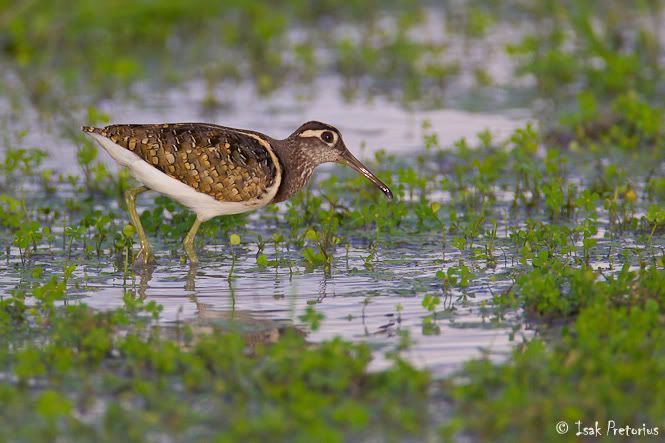

Painted snipe
Okavango Delta, Botswana
Canon 1D Mark IV | 600mmf/4 + 1.4tc | 1/1250 sec at f/5.6, ISO 800


Feeding time
Okavango Delta, Botswana
Canon 1D Mark IV | 600mmf/4 + 1.4tc | 1/2000 sec at f/5.6, ISO 2500


The workshop was a great success - from the flight into the lodge over the Okavango Delta that gets the excitement going at the beginning of the workshop, to the sharing of photos during our afternoon informal workshop sessions. Anywhere in the bush where you have great game-viewing and a relaxed atmosphere is a great place to learn and put the theory of wildlife photography into practice.
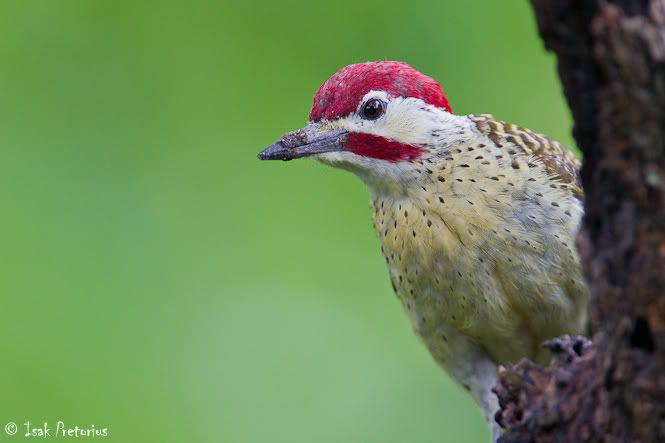

Who's looking at me?
Okavango Delta, Botswana
Canon 1D Mark IV | 600mmf/4 + 1.4tc | 1/160 sec at f/5.6, ISO 800
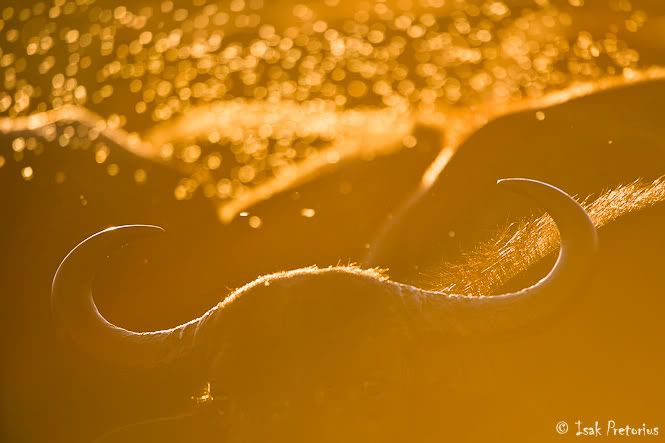

Horns of the bushveld
Okavango Delta, Botswana
Nikon D3s | 200-400mmf/4 | 1/500 sec at f/4, ISO 400


December in the Okavango Delta means lots of birds, and we had great sightings of raptors, waders and the all the migrant species. Some of our highlights included seeing Pygmy Geese and Rosy-throated Longclaw, and in addition we got great photos of kingfishers and the African Painted Snipe to name a few.


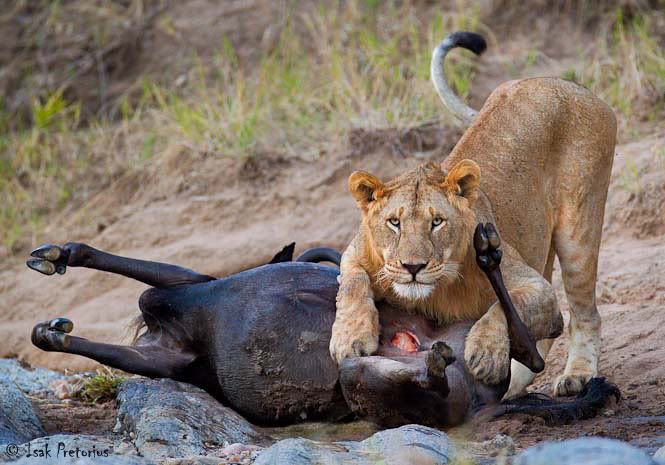
We made the most of the variable weather conditions we experienced as we photographed everything from early morning backlit buffalo, carmine bee-eaters in the rain, to lions shaking their head after the rain. I loved the variable weather and mild temperatures and I like in particular how it forces you to be creative and experiment with all the different genres of photography to make the most of the trip.
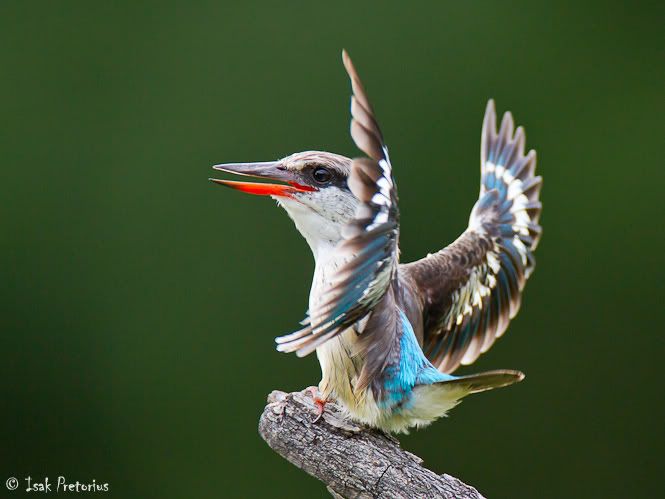

Striped kingfisher
Okavango Delta, Botswana
Canon 1D Mark IV | 600mmf/4 + 1.4tc | 1/200 sec at f/5.6, ISO 640


Transport
Okavango Delta, Botswana
Canon 5D Mark II | 16-35mmf/2.8 | 1/200 sec at f/8, ISO 800


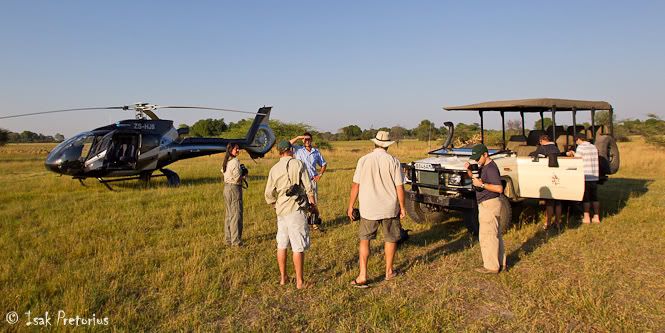
Chiefs Camp is one of the best camps in Africa. Having cocktails on the deck while watching elephants bathing in the water right in front of you makes you realize that this is a special camp. It's not just the location, the luxury, the quality of the service or the food, but also the homey feeling that it provides that people always enjoy the most. Besides game drives, the camp also offer a variety of other activities. A flip over the swamps with a helicopter was a great way to end our workshop and we were all very sad to leave Chiefs Island. We are already looking forward to visiting there next year again. We'd like to say a big thanks to Rory, Jade, Basil, Petra, the rest of the camp staff, and our fantastic driver guides Rex and Jonathan who made this such a memorable trip for us all!

Thursday, November 25, 2010

NOT JUST ABOUT THE PUKU

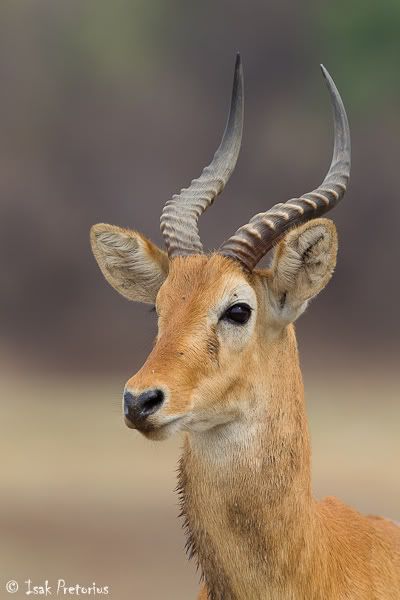
The Puku is an antelope found in wet grasslands in southern Democratic Republic of Congo and in Zambia. It stands about 80cm tall at the shoulders and weigh between 70 to 80kg. Puku are sandy brown in colour with the underbelly a few shades lighter. Males have around 50cm long ridge structured horns. Both territorial and alarm calls are a repeated shrill whistle sound. They are beautiful animals! The recent C4 Images Workshop took our guests to Puku Ridge Camp in the South Luangwa National Park in Zambia. There are a lot of puku in the park, but we didn't specifically go there to photograph them! Our objective was to find plenty of game and other photographic opportunities. Not only did we find exactly what we were looking for, but we were also blown away by the incredible beauty and variety that the park had to offer!


Puku Portrait
South Luangwa, Zambia
Canon 1D Mark IV | 600mm | 1/1250sec at f/5.6, ISO 400


The South Luangwa National Park is a photographer's dream - wild and remote it's one of Africa's most unspoiled places with enormous spaces, a wide variety of habitats and a high density of game. It is one of Zambia's largest National Parks, covering an area of over 9,000 square kilometers in the Luangwa Valley. The survival of the valley depends on the winding Luangwa River, crowded with hippos, crocodiles and waterfowl, and its numerous tributaries that course through the park. Just before the big summer rains the bushes have wilted and the earth becomes bone dry, so animals assemble along the river and at the remaining waterholes. This is the best time for game viewing.


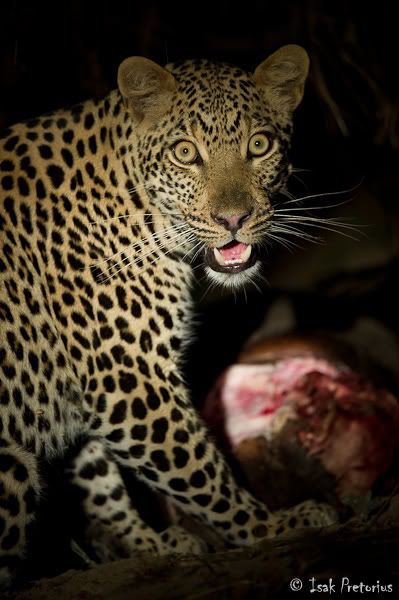
Leopard Meal
South Luangwa, Zambia
Nikon D3s | 400mm (200-400mm) | 1/160sec at f/4, ISO 1600


The Photographic Workshop was held at Puku Ridge Camp, located in a remote area of the National Park overlooking a floodplain close to the Luangwa River. To reach this camp requires a two hour flight from Johannesburg to Lusaka and then a chartered transfer to Mfuwe Aiport. It's a small intimate camp with seven luxury tents and a communal area with a lounge, bar, dining area and deck, all overlooking a waterhole on the floodplain. As at all Sanctuary Lodges, the food and service are exceptional and we were especially impressed by the quality of the guides. At the waterhole in front of camp there is a constant flow of animals coming to drink during the day, making it an attractive option to skip the afternoon drive to photograph at the waterhole instead, and this from the comfort of the lounge. When we saw a leopard drinking at this waterhole during dinner on our first night, we knew this workshop was going to be special.


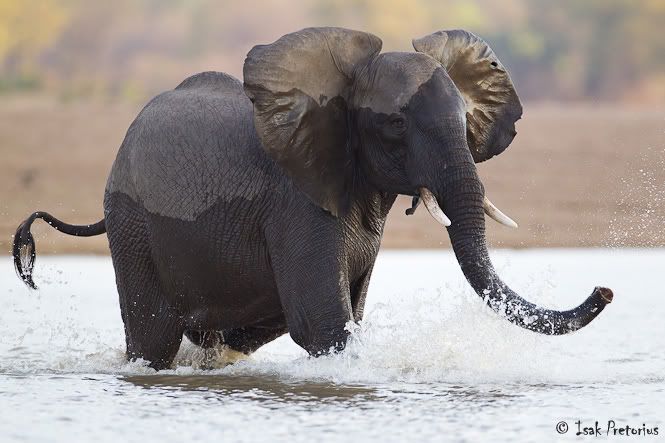
Splashing in the Luangwa River
South Luangwa, Zambia
Canon 1D Mark IV | 600mm | 1/500sec at f/4, ISO 800


As a photographic workshop our guests were not just keen to visit one of Africa's world-renowned wildlife havens, but also keen to learn all the genres and techniques of nature photography. Our workshops always attract people that have an appreciation for nature and a passion for photography which by default guarantees the workshop to be a great success. We had great fun teaching everything from light and composition, portrait, action, landscape, slow-shutter panning blur, flash, spotlight-at-night, and HDR photography, to processing photos and managing a large photo library. The theory is put into practice during the morning and afternoon game drives where the photography guides are close by to lend a helping hand.


Carmine Snack
South Luangwa, Zambia
Canon 1D Mark III | 200mm (70-200mm) | 1/2500sec at f/5.6, ISO 400


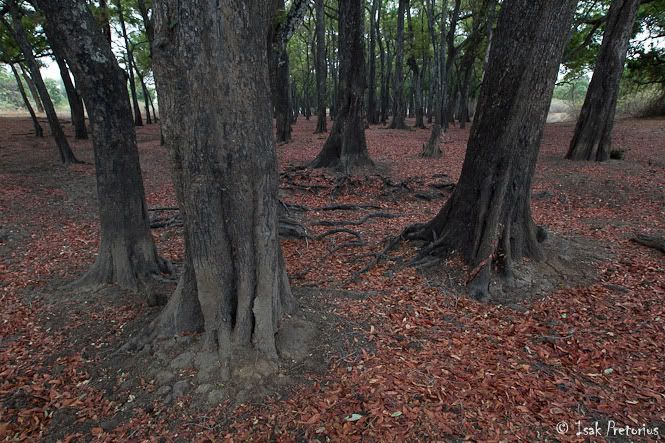
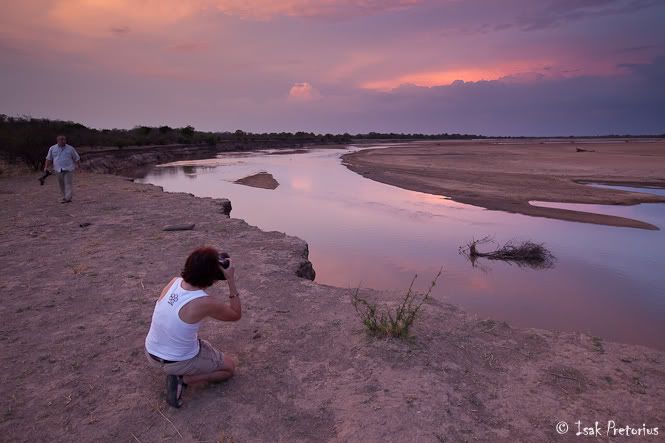
We were spoiled with excellent sightings of predators and general game, birds and spectacular landscapes. Highlights included three leopards trying to break through the tough skin of a dead young hippo. The cause of death was unsure, but the leopards struggled for hours to get to the meat without success and became very agitated with the whole situation. Later that night we returned to see how four lions eventually chased the leopards off the carcass. Other highlights included photographing at a carmine bee-eater colony, ebony forests, mating lions, elephants walking through the river, pools with hundreds of hippos, and spectacular sunsets and sunrises on the Luangwa River.


Ebony Grove
South Luangwa, Zambia
Canon 1D Mark IV | 16mm (16-35mm) | 1/250sec at f/8, ISO 400


Scaping on the Luangwa River
South Luangwa, Zambia
Canon 5D Mark II | 23mm (16-35mm) | 1/10sec at f/8, ISO 1250


A big thank you to camp managers Don and Suku, our guides Joseph and Malemia, and the staff of Puku Ridge Camp who made this such an awesome experience for us all!

Monday, November 15, 2010

EXPERIENCE WILDERNESS

Chiefs Island in the heart of the Okavango Delta is pure wilderness and a land of incredible beauty. Vast open seasonal floodplains with palm tree islands. Herds of animals roaming free and wild exactly like they have for thousands of years. Unspoiled scenic beauty that stretches as far as the eye can see. To experience this and to have it all to yourself to enjoy is pure magic! The recent C4 photographic workshop to Chiefs Camp offered our guests exactly that. This is my favorite destination in Africa.


Leopard and Cub
Okavango Delta, Botswana
Nikon D3s | 400mm (200-400mm) | 1/640sec at f/5, ISO 1600


New Life in Gold
Okavango Delta, Botswana
Nikon D3s | 290mm (200-400mm) | 1/60sec at f/16, ISO 800


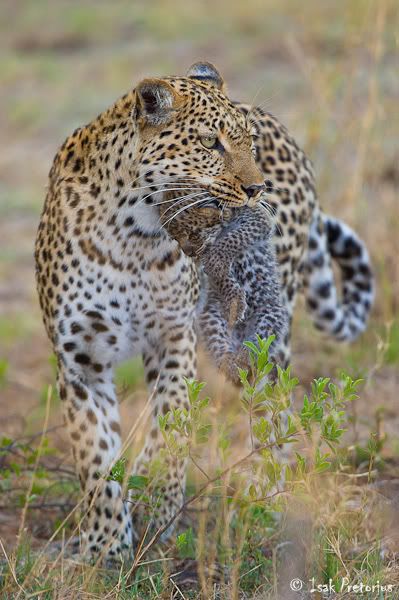
Our photographic workshop was a great success, especially because we're such like-minded people, having a lot of laughs together, and enjoying the good photography and nature experience that this wilderness had to offer. Game viewing was fantastic with great sightings of the general Delta game, the big five, and a rare glimpse of a leopard carrying a week old cub. This leopard is close to camp and very accommodating towards photographers, a beautiful poser. We are looking forward to seeing her more during the upcoming safaris to Chiefs Island. Although we didn't do serious birding, we unofficially tallied more than 130 species for the trip. This included numerous lifers for most of the guests.


Scouting
Okavango Delta, Botswana
Nikon D3s | 200-400mmf/4 | 1/640sec at f/5, ISO 1600


Chiefs Camp is tucked between beautiful big Jackalberry, Sausage and Apple-leaf trees on the edge of the actual island, overlooking a seasonal floodplain. The camp has recently been renovated and the accommodation, food and comfort that the camp offers are exceptional. It's easy to see why this camp has been voted the best lodge in Botswana for three years in a row now!


Rufous-naped Lark Display
Okavango Delta, Botswana
Canon 1D Mark IV | 600mm | 1/2500sec at f/4, ISO 320


As a photographic safari our objective was to get top wildlife photos as much as it was to experience this untamed wilderness. Chiefs Island delivered superbly in both categories. Apart from the good photography, we also extended our experience into the air with a flip in a helicopter over the Delta, and an afternoon's mokoro experience on one of the main channels in the Delta.


Okavango Delta Helicopter Experience
Okavango Delta, Botswana
Canon 1D Mark IV | 16mm (16-35mm) | 1/1000sec at f/8, ISO 400


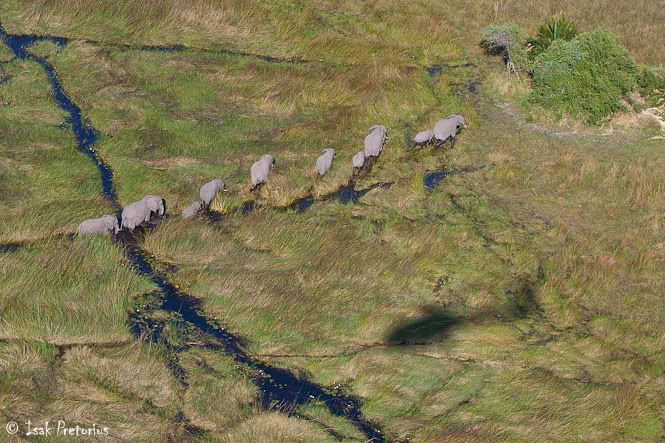
Elephants from the Air
Okavango Delta, Botswana
Canon 5D Mark II | 78mm (70-200mm) | 1/2500sec at f/8, ISO 1000


Thanks to all our guests, my co-host Albie Venter, our drivers Ishmael and Sky, and all the staff at the camp who made this such a memorable experience for all of us!

Monday, November 1, 2010

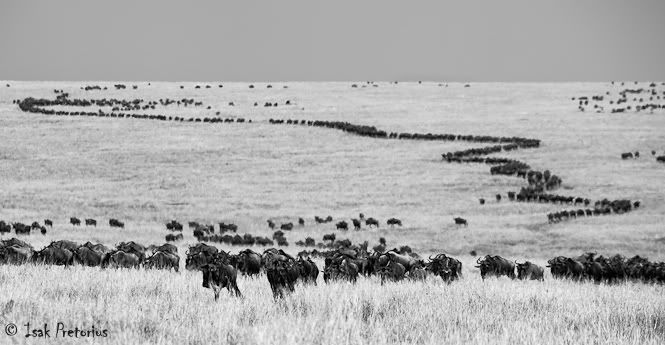
COUNTING WILDEBEEST

How long will it take you to count two million wildebeest given that it takes you one second to count one wildebeest and that you can count for eight hours per day? This is the question that one of our guests had during the recent Masai Mara Photographic Safari with C4 Images and Safaris.


Migration
Maasai Mara National Reserve, Kenya
Nikon D3s | 200-400mmf/4 | 1/1000 sec at f/8, ISO 320


The fact is that two million wildebeest is a lot of animals, and it is just as Shem warned people before the trip - it's a lot to take in. The sheer number of animals is overwhelming and as a natural history experience it's one of the spectacles everyone should see at least once in their lifetime!


Two brothers
Maasai Mara National Reserve, Kenya
Nikon D3s | 200-400mmf/4 | 1/500 sec at f/8, ISO 450


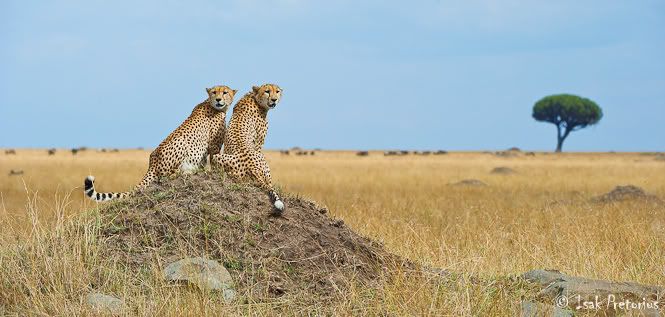
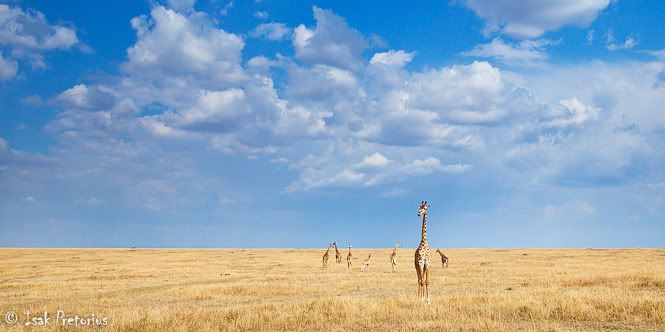
The photography during our safari was brilliant - it really put wildlife photography in a new light. The sightings in the Mara is so good that we would often just drive past inactive predators because we knew that we were going to see better action somewhere else. Everyone was keen on the classic Mara shots - cheetah on an anthill, lions on a kill, vultures on a wildebeest carcass, wildebeest crossing, and the lone tree with big sky scene to name a few. We were fortunate that we had the opportunity to cover all those shots in the first few game drives which forced us to chase better sightings and more creative shots. Apart from the wonderful wildlife photography that the Masai Mara has to offer, the other highlight of the trip was the good coffee that Kenya is known for - strong, smooth and aromatic!


Open spaces
Maasai Mara National Reserve, Kenya
Canon 5D Mark II | 16-35mmf/2.8 | 1/320 sec at f/8, ISO 200


The tent camp on the Mara river with it's bush feel was a hit with everyone. We were treated to all sorts of animal calls at night, and even leopard calls every morning. One morning during coffee we managed to spot a leopard as he walked past our camp only a few hundred meters away from us. The week before, our guests from the previous photo safari hit the jackpot when they saw one of the most dramatic wildebeest crossings right in front of camp.


Mine
Maasai Mara National Reserve, Kenya
Canon 1D Mark IV | 600mmf/4 | 1/400 sec at f/4.5, ISO 800


With camp located inside the reserve and having five safari vehicles to our disposal we made great work of first morning light. Early morning landscape shots were at the order of the day. Each vehicle had the option of having a packed breakfast out in the veld or to have breakfast back at camp, but we all wanted to stay out photographing as long as we could. The vehicles we use are very photographer-friendly, with the option of photographing through the top hatch or through the side windows. Each photographer also had a whole row of seats available to him/herself which added to the comfort of the ride.


Day awakens
Maasai Mara National Reserve, Kenya
Canon 1D Mark III | 16-35mmf/2.8 | 1/10 sec at f/11, ISO 500


From all the Safaris I've ever hosted, this was the trip where memory cards got filled to capacity the fastest! Thank you Lexy and the staff for a wonderful trip!


Sunrise over the plains
Maasai Mara National Reserve, Kenya
Canon 1D Mark IV | 600mmf/4 | 1/500 sec at f/4, ISO 100


Taking flight
Maasai Mara National Reserve, Kenya
Nikon D3s | 200-400mmf/4 | 1/2500 sec at f/5.6, ISO 900

So how long will it take you to count two million wildebeest? The answer is ... more than three months!!


Playing hyenas
Maasai Mara National Reserve, Kenya
Nikon D3s | 200-400mmf/4 | 1/800 sec at f/4, ISO 2000


Secretary bird
Maasai Mara National Reserve, Kenya
Nikon D3s | 200-400mmf/4 | 1/2000 sec at f/5.6, ISO 640

Friday, October 1, 2010

RATING YOUR PHOTOGRAPHS

Finding your best photographs quickly and easily is essential for any serious photographer. This becomes increasingly important if you have a large photo library. In all the popular workflow packages that photographers use these days, the star rating system is the standard method to distinguish between exceptional, good and average photos in your library. It can be overwhelming and very time consuming to search through thousands of photos when you are looking for your best ones. The objective with star rating photos is thus to filter to a manageable number of photos for each star rating value, rated carefully through your personal well-defined process.


The physical process of star rating photos is relatively simple and can be done with ease in all the popular photo management software packages like Lightroom, Aperture, Bridge or Breezebrowser. In Lighroom, for example, I press the 1, 2, 3, 4, or 5 button on selected photos to rate them. To remove the rating I simply press the 0 key again. The biggest problem I have found with the star rating system when looking at our guests' rating process is when the standard for the different rating values are not well defined by the user, they end up getting confused about the rating value, and that results in many over and under rated photos.


I've come up with my own simple and effective star rating system which requires minimum effort but provides me with the search power that I require to find specific photos. If you tend to take a lot of photos then it becomes increasingly important to follow a process to quickly rate the best photos and eliminate the unusable photos. You can save yourself a lot of time if you never have to look at any unusable photos twice. The most important initial objective for me when downloading new photos is to rate them. I "develop" the photos much later in my workflow, when I have time, usually only when I need to submit photos somewhere or when I create a collection of photos.


My process works as follows: While I download my images into Lightroom, I start going through them one by one, judging their usability. Photos that are technically correct and properly exposed I mark as 1-star, and photos that are striking and worth another look I mark as 2-star. After I've gone through all the downloaded photos, I delete all the photos that have not been marked with any star values. At this stage I've optimized my effort by getting rid of the unusable photos, but also rating the striking photos as 2-star so that I have a manageable number of photos to search through when I want to see my best work.


The second step is to look through all my 2-star photos. Now I'm looking for striking images that are unique and that have "something special" about them. I mark those images as 3-star: they are typically the ones that I recon stand a good chance to do well in a competition for example. I would also make sure that I keep a maximum of three photos within a series of very similar photos.


The grading standard between 1, 2, and 3-star photos is thus very simple and straight forward, but if you have a large photo library you might still have too many 3-star photos to search through to find your best photos. Now we have to rate the best of the best. My next step is to look at all my 3-star photos within one-month timeframes and rate the best 3-star photo as a 4-star. Thus, within any year timeframe I could have more or less twelve 4-star photos for that year. The last step is to select the very best of the best by picking the best 4-star photo from a one-year timeframe and rate it as a 5-star photo. The 5-star photos are my very best photos, and after a career of photography I might only have a handful of 5-star photos. If someone wants to see my best photos I could show them the few 5-star photos, but also the larger collection of 4-star photos which have been carefully selected but that is small enough not to overwhelm the viewer.


My grading standard is:

1-star: sharp, correctly exposed and usable
2-star: the same as 1-star, but it has something special about it, e.g. great light, action, behavior or a unique species
3-star: the same as 2-star, but the photo is unique and draws your attention
4-star: the best 3-star image within a 1-month timeframe
5-star: the best 4-star image within a 1-year timeframe


1 Star
Greater Kruger, South Africa
Nikon D3s | 270mm (200-400mm) | 1/800sec at f/5.6, ISO 400


2 Star
Kgalagadi Transfrontier Park, South Africa
Canon 1D Mark III | 300mm f/4 | 1/320sec at f/4, ISO 200


3 Star
Okavango Delta, Botswana
Canon 5D Mark II | 70-200mmf/2.8 | 1/1250 sec at f/5.6, ISO 400


4 Star
Mashatu Game Reserve, Botswana
Canon 5D Mark II | 600mmf/4 | 1/50 sec at f/7.1, ISO 1250


5 Star
Mashatu Game Reserve, Botswana
Canon 1D Mark III | 24-70mmf/2.8 | 1/160 sec at f/4.5, ISO 2500


Typically, if you've collected 50,000 usable photos over 12 years your star rating breakdown could be as follows:

1-star: 45,000 photos
2-star: 5,000 photos
3-star: 500 photos
4-star: 144 photos
5-star: 12 photos


Star rating photos adds a lot of value to my photography on many levels. It depends however on my decline to follow my process diligently, but I can now, with minimum effort, enjoy my photography so much more! I hope this blogpost will help you in formulating your own process to make the most of your photography!


- Isak